One of the many conspiracies to have swirled around the Marvel Cinematic Universe since the Multiverse Saga ushered in a clear and obvious downturn in quality is that Kevin Feige’s apparent obsession with Rick and Morty is to blame, and it’s not one that’s entirely without merit.
Michael Waldron did win praise for the first season of Loki, but that didn’t extend to Doctor Strange in the Multiverse of Madness, leaving fans plenty concerned that the latter two Rick and Morty veterans have been tasked to whip Avengers: The Kang Dynasty and Secret Wars into shape. However, what hasn’t been mentioned as much is that Eric Martin – lead writer of the Asgardian trickster’s second season – knows Waldron from grad school and also played a part on multiple episodes of the animated favorite.
And yet, after he revealed that Multiverse of Madness took up so much of Waldron’s time that he was left to essentially bring Loki‘s first run of episodes across the finish line, he’s ironically become the first Rick and Morty veteran to win widespread praise for their MCU efforts.
Quantumania and Multiverse of Madness haters: Take the Rick and Morty writers off of Kang Dynasty and Secret Wars!#LokiSeason2 Fans: bring the Rick and Morty writer on for Kang Dynasty and Secret Wars! https://t.co/oiGWCuVS5E
We’re not saying the sentiment is 100 percent accurate and entirely on the money, but it’s easy to see how those dots have been connected. Rick and Morty is polarizing enough on its own thanks to its recent controversies, and that seems to have extended through to the MCU.
from Movie News | Movie Reviews | Movie Trailers https://ift.tt/BSUZ5A9
For countless Friends fans, Matthew Perry has always been so much more than just an actor.
To many of us, he’s been Chandler Bing ⏤ the lovable, relatable, hilarious everyman who can still make us laugh out loud decades after the hit sitcom aired its final episode. He may have lived a tortured life behind the scenes ⏤ as detailed in his memoir Friends, Lovers, and The Big Terrible Thing ⏤ but on camera, you’d never know that Perry was anything more than a truly gifted comedian.
This is why it came as such a shock when it was reported that Perry had passed away at the age of 54 at his Los Angeles home on Oct. 28, 2023. Within minutes, Perry was trending on X (formerly known as Twitter) as die-hard fans expressed their heartbreak and paid their respects to a man who felt more like a friend than a stranger. While Chandler Bing will inevitably be the role that he is forever remembered for, Perry appeared in many other movies and TV shows over the course of his dynamic career. Here, in no particular order, are some of the highlights.
Fools Rush In
This romantic comedy starring Perry and Salma Hayek shows what can happen when a night of passion has unexpected consequences. Perry plays Alex, a construction supervisor who learns a few months after a one-night stand with Hayek’s Isabel that she is pregnant with their child. Alex does the sensible thing and immediately proposes to Isabel, but as the two soon find, their varying cultures and customs give “for better or worse” a whole new meaning. The movie doubled its $20 million budget at the box office and while some critics didn’t love it, audiences gave it a respectable 64% score. Legendary film critic Roger Ebert called it a “sweet, entertaining retread of an ancient formula.”
Numb
This lesser-known indie film made the rounds of the festival circuit and showed off Perry’s range. He’s not bumbling around or screaming, but rather plays a nuanced character going through a difficult ordeal. That ordeal is a personality disorder that makes him feel like he’s in a constant dream state and can’t feel anything. Perry’s screenwriter is desperate to fix his condition so he can marry the girl of his dreams, and while the movie never got a proper theatrical release, it won an audience award at the Gen Art Film Festival.
Go On
Perry received a lot of television opportunity following the success of Friends, and one of those chances was on the show Go On. The comedy sees him play a sports talk show host who has to learn how to move on following the death of his wife ⏤ hence the title ⏤ and features a more mature side of him and a different kind of comedic performance than Friends fans are used to. The ensemble is rounded out by No Hard Feelings‘ Laura Benanti, Star Trek’s John Cho, and Abbott Elementary’s Tyler James Williams.
The Odd Couple
This funny remake ran for three seasons, with the exceptional Thomas Lennon playing Felix as the obsessive-compulsive neat freak to Perry’s slob. The original will always be a classic, but Perry’s version has a breezy, lighthearted feel that makes it perfect for contemporary viewers. Perry executive produced the series and has solid chemistry with Lennon, which makes sense given that they’d previously worked together in 17 Again.
Studio 60 on the Sunset Strip
This one boasts a cavalcade of stars and one of the all-time great television writers in Aaron Sorkin. A biting social commentary of the world of late-night comedy, Sunset features Perry as a writer who takes over for a Saturday Night Live-style show. Unfortunately, this one came out as the same time as 30 Rock, a different show about the same sort of subject. While it beat out 30 Rock in the ratings, it was pretty expensive to produce, so NBC ultimately axed it. It also lost some steam toward the end of the season, but Perry is great in it and it’s maybe his best role outside of Friends.
Friends
Chandler Bing is, and always will be, Perry’s best role. This is the show that made him a bona fide superstar. His “could I be any more (insert thing here)” line was endlessly quotable. His chemistry with Joey is legendary. His romance with Monica is sweet and fun. It’s no surprise why the show ran for 10 seasons, and while he got a little fuzzy in some of the episodes due to what we now know was a severe drug addiction, Perry managed to pull out unforgettable performances regardless. If you didn’t have the great fortune of living through the ’90s, when new episodes dropped on Thursday nights, it’s hard to describe just how popular and pervasive this show was. It’s arguably the best sitcom of all time, with a pitch-perfect cast that Perry was instrumental in rounding out. There’s a reason we still watch and love the episodes all these years later, and now that Perry has been taken from us way too soon, we’re more thankful than ever to have his catalogue of performances to remember him by.
from Movie News | Movie Reviews | Movie Trailers https://ift.tt/C53HjI2
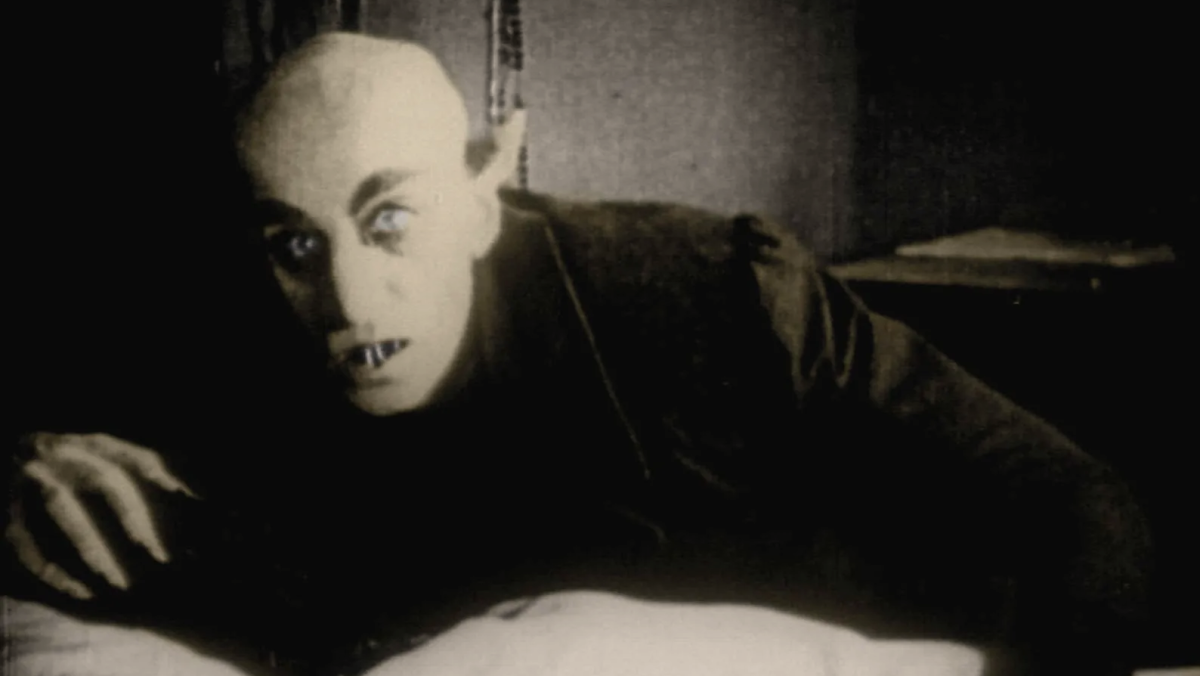
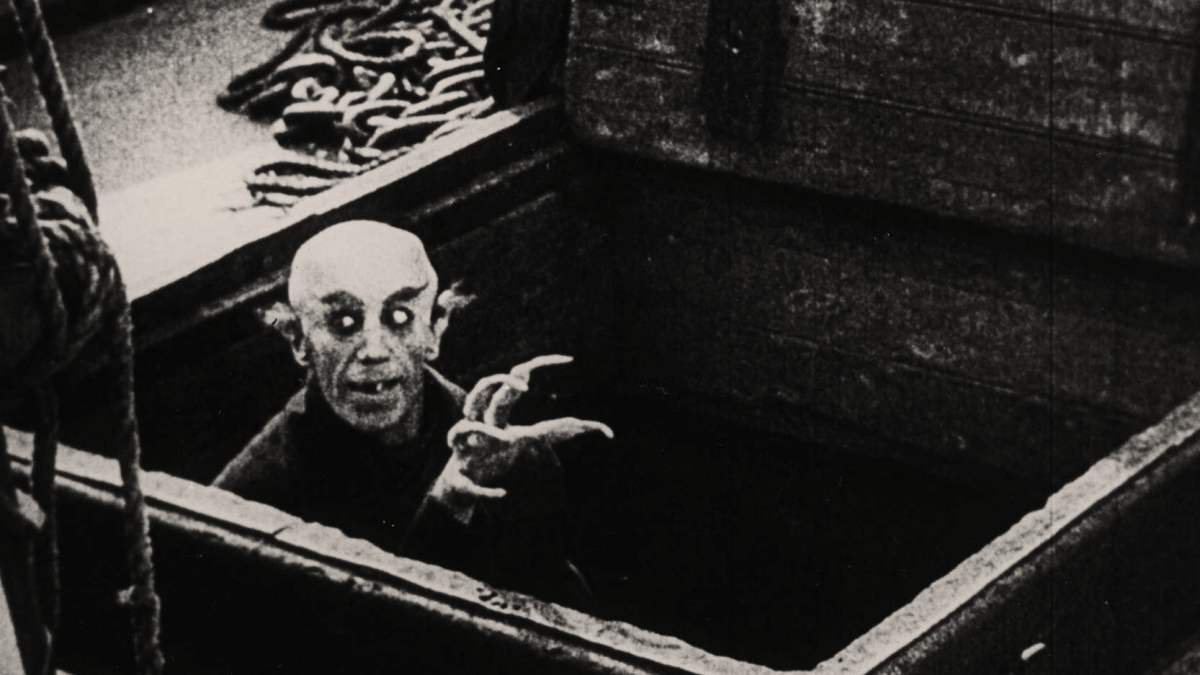
Ask the right kind of insufferable nerd what their favorite Dracula movie is, and they’ll absolutely say “Nosferatu.” If you’re extra lucky, they’ll even call it “Nosferatu: A Symphony of Horror” or its original German title, “Nosferatu: Eine Symphonie des Grauens,” just to hammer home the fact that they’re smarter than you.
And you know what? They have a point. Nosferatu stands as a classic of the horror genre more than 100 years after its debut. It inspired generations of horror aficionados, influencing writers, actors, and directors, and changing the vampire mythos forever.
It’s also a hack job. The film was the first script commissioned by an independent German production company called Prana, founded by a pair of oddballs with a love of the occult. Despite having begun the project with the specific intention of creating a Dracula adaptation, featuring inescapably close knockoffs of the book’s characters, events, and plot beats, Prana never bothered to secure the rights to the story. They changed “Count Dracula” to “Count Orlok,” “Jonathan Harker” to “Thomas Hutter,” and England to Germany, with some accounts claiming that the changes were made to avoid prosecution, while others saw them as small details that made the story more palatable for German audiences. Whatever the reasoning, Nosferatu was pretty clearly just Dracula with a new coat of paint slapped on. For context, Bram Stoker’s novel had only hit bookstores in 1897, 24 years before Nosferatu started production – it would be like if a studio today put out a word-for-word German remake of Harry Potter and the Prisoner of Azkaban, but changed Harry Potter’s name to Wolfgang, set the whole thing at the University of Freiburg, and called it Magic Boy and the Mean Dog Uncle.
How most copies of Nosferatu got set on fire
The similarities between Stoker’s work and Prana’s film weren’t lost on anyone, least of all Stoker’s widow, Florence. She got mighty litigious about Prana’s whole “let’s Mad Libs a copyrighted work and hope nobody says anything” approach to originality, suing the fledgling studio for a staggering $5,000 in damages. Between the lawsuit and the failure of Nosferatu at the box office, Prana declared bankruptcy, never producing another title. The judge in the case declared the film the rightful property of Florence Stoker, who promptly ordered that all prints of Nosferatu were to be burned. The court backed her up, making it effectively illegal to own a copy of the film.
Ask anyone involved with The Star Wars Holiday Special and they’ll tell you: When a movie inspires the people in charge to publicly describe how badly they want to burn the negatives, it has the sort of publicity that most projects can only dream of. It didn’t take long for Nosferatu to become the stuff of legends. Thanks to its cult status, several prints survived the Stoker estate’s purge, and by the time that Florence died in 1937, the movie was getting rave reviews – save one, in The New York Times, where it was referred to in 1929 as an “orgy of gooseflesh,” whatever that means. Film geeks continued to pass around copies of the film for decades, with dozens of unofficial restorations in circulation by the time the film entered the public domain in 2019. In the years since its debut, Nosferatu has become every bit as iconic an entry in the annals of vampire movie history as Bela Lugosi’s Dracula. It’s inspired two remakes: one directed by Werner Herzog in 1979, which says the quiet part out loud and calls its main antagonist “Dracula,” and one scheduled for 2024 starring Bill Skarsgard. There was even a horror movie based on the making of Nosferatu itself, 2000’s Academy Award-nominated Shadow of the Vampire, starring Willem Dafoe as original Orlok actor Max Schreck. Schreck, for his part, would be immortalized across media for generations to come, lending his name to the secondary villain in Batman Returns, and his likeness to a never-ending series of Spongebob Squarepants visual gags.
A century later, the morality behind the creation of Nosferatu is, at best, super hazy. The lesson, however, is clear: Commit blatant copyright infringement and refuse to carry out the orders of the court, and your art will survive in perpetuity. Or, put more simply, “it’s better to ask forgiveness than permission.”
from Movie News | Movie Reviews | Movie Trailers https://ift.tt/uEbgq9Z
Shall I compare thee to a summer’s day? We may not all have Shakespeare’s romantic writing skills, but we can all enjoy a romantic story brought to life with the power of animation.
Sometimes we all just need a little reminder that love is good and alive in the world, or maybe we just need a good movie to watch with tasty snacks and someone special. From classic romantic tales, to deep and impactful dramas, these animated movies have something for everyone in search of love.
From Up On Poppy Hill
We all know just how legendary Hayao Miyazaki is, but plenty of people overlook one of the few times his eldest son, Gorou Miyazaki, got to direct a film for Studio Ghibli. The romance between Umi Matsuzaki and Shun Kazama that blossoms, gets killed off by the frosts of fate, and blossoms again all takes place while a group of students tries to save a historic building from being torn down, with the Olympic games on the way. Don’t be among those who overlook the deeper cuts in the Studio Ghibli catalogue, give this one a shot!
Shrek & Shrek 2
There are two kinds of people in this world; those who got absolute chills down their spines as Shrek raced towards Fiona while Jennifer Saunders belted “Holding Out for a Hero,” and filthy liars who say otherwise. Who cares if it breaks the rules a bit to include two movies in one spot on a list; Fiona and Shrek’s romance is as goofy as it is seriously heartwarming. Heck, add Shrek Forever After in there and bawl your eyes out.
Based on the hit manga with the same name, Doukyusei is the story of two high school boys who seem so incredibly different, yet fall head over heels in love. The watercolor-style animation is simply gorgeous, and the story is that perfect kind of heartwarming that we romantics-at-heart are always looking for. You don’t need to be on the LGBTQ+ crew to really enjoy this one, either; it’s a masterfully crafted story that literally anyone can enjoy.
Corpse Bride
Horror nuts need cute romantic stories too, and there’s no other film quite so macabre, that gets the heart beating quite like Corpse Bride. Victor Van Dort and Victoria Everglot are hesitant about their arranged marriage at first, but it’s so touching to see how deeply they fall in love. Because hey, you really gotta love someone to turn down a smoking cold undead wife, right? Emily even sacrifices her chance to finally be a bride for their love, so you know it’s the real thing.
Your Name
This is one of those movies that will punch you in the gut harder — but in a good way — the less you know before going in. The basics you do need to know is that a girl named Mitsuha Miyamizu and a boy named Taki Tachibana suddenly switch bodies, and get to know each other through controlling the other’s physical form. I really don’t want to accidentally spoil the end by getting into the mystery side of the plot, or the climax that will leave you in tears. Just trust me, bring some tissues, and get ready to feel your heart swell!
An Extremely Goofy Movie
Despite any rumors you’ve heard over the years, there is no official confirmation that Goofy’s wife and Max’s mother has passed away. However, it’s obvious one of the most beloved goofballs in animated history deserves his share of romance too!
That’s part of the beauty of this film. The focus may not be entirely on Goofy and his new girlfriend Sylvia Marpole, but how often do we even see such wholesome and heartwarming depictions of two older adults finding love like this? It may not be a “dim the slights and snuggle up close” kind of Neflix and chill kind of romantic movie, but it absolutely is a love story worth watching.
A Silent Voice
There are undeniably a lot of problematic tropes found in media featuring disabled people, which is part of what makes A Silent Voice that much more special. The animators went to great lengths to have the characters communicate in fully-accurate Japanese Sign Language, and showed some of the harsh realities some disabled people face while growing up and trying to find love. All of this in one convenient package, to leave you clutching the nearest soft object to your chest while watching every twist and turn.
Just one quick warning:A Silent Voice does contain some dark subject matter at points, so it might be good to look up content warnings about the film to make sure you’re in an okay mental space before putting it on.
Anastasia
1997’s Anastasia will always be remembered as one of Don Bluth’s greatest creations of all time. This fictionalization of the real life Romanov story is incredibly sweet. Dmitri and Anya’s relationship is so touching, and his sacrifice to ensure she finally has the family she’s always wanted is enough to even make grown adults shed tears.
Just stay as far away as possible from the dumpster fire “sequel” movie Bartok: The Magnificent. You’ll thank me later.
Thumbelina
Alright, maybe I just have a soft spot for Don Bluth, but every time Prince Cornelius pops up right as Thumbelina is about to lose hope in finding him and sings, “And I’ll never let you fall,” it’s time to cue the waterworks. Yes, this is a goofy little classic romance story suitable for kids but hey, sometimes an extremely cheesy story is still good, dang it! May we all be Thumbelinas who find our Prince Corneliuses out there.
Kaguya-sama: Love is War – The First Kiss That Never Ends
I was fortunate enough to see this movie during its limited theatrical run in the United States, and I am not exaggerating when I say it left me openly bawling my eyes out. I had even brought the love of my life to the theater with me, who had no knowledge of the rest of the series the movie is based on, and they were sobbing equally alongside me.
This movie is the ultimate depiction of what it takes to reveal the most vulnerable parts of yourself to the person you love, and the glorious results for doing so. Whether you watch the rest of Kaguya-sama: Love Is War to have full context for the movie or not, it’s an unforgettable experience.
from Movie News | Movie Reviews | Movie Trailers https://ift.tt/aFRD8c3
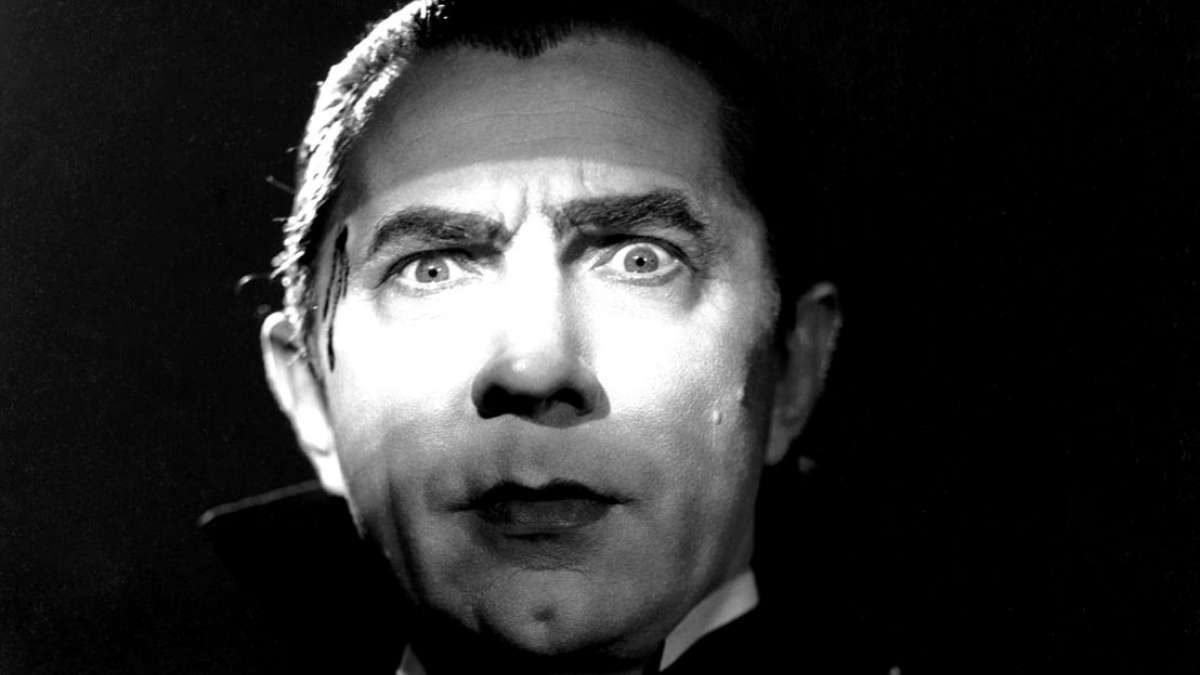
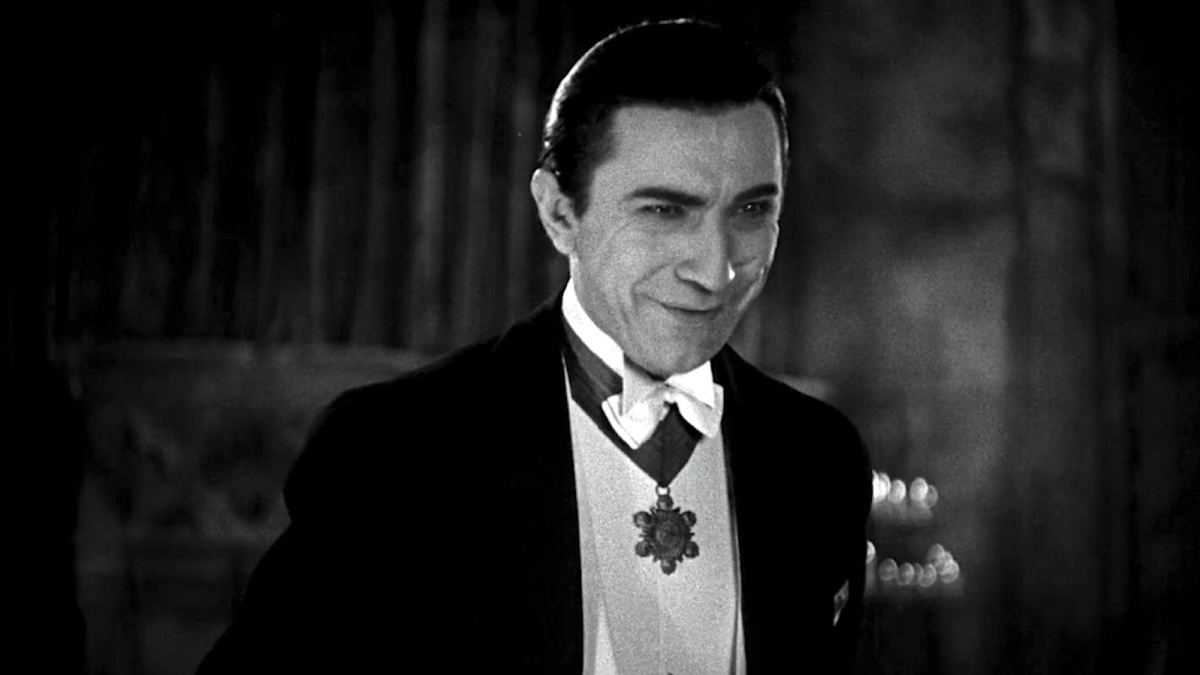
It’s been just a hair shy of a century since Bela Lugosi’s Count debuted his most iconic on screen role, and he’s still the default version of the character – the iteration of Transylvania’s most notorious blood sucker that your brain probably jumps to when you picture the word “Dracula.”
He came by the part honestly. Born Béla Ferenc Dezső Blaskó, the Hungarian performer got his start in the golden age of show business, back when professional acting was still on par with being livestock, but with more travel and toxic pancake makeup. In between stints as a laborer, World War I veteran, and political refugee, he worked in silent movies – first in his homeland, then Germany, and finally in the United States. Additionally, he took work as a performer in stage shows, discovering a real talent for playing undead nobles when he was cast as the lead in Dracula in 1927. The Broadway production was a success, dovetailing into a touring show that saw Lugosi traveling the country and, eventually, landing the part in the film adaptation in 1931.
And do you know what’s wild? Considering the cultural ubiquity of the Universal stable of movie monsters and the socially hardwired image of Lugosi as Dracula? The actor only played the Count twice on the big screen.
Dracula (1931)
Image via Universal Pictures
After years of playing Count Dracula on stage, Lugosi wrangled the same role in Tod Browning’s film adaptation of Dracula. Taking into account Lugosi’s experience playing the part, and that his indelible interpretation has become inseparable from the character itself, it’s strange to think that he wasn’t the studio’s first choice; they rotated through a merry-go-round of actors before deciding that Lugosi had the chops.
For his part, Lugosi didn’t do himself any favors, forgetting to play it cool in favor of telling anyone who would listen all about how positively boffo he was for playing Dracula in the talkies. His enthusiasm got him one of the most famous roles in film history, a $3,500 paycheck, and a powerful lesson in the importance of playing hard to get.
And sure, Browning’s masterpiece of early horror cinema ended the way that most monster movies did at the time – with a guy wearing blush killing the villain, and his lady friend really appreciating it – but a little thing like dying couldn’t keep Dracula down for long, right? …Right?
Abbott and Costello Meet Frankenstein (1948)
Image via Universal Pictures
For the next 17 years, Lugosi lived in Dracula’s shadow, voicing frustration at his inability to find acting work outside of the “creepy guy” line of employment. Unlike his contemporary, Boris Karloff, who kept the lights on with regimented returns to the role of Frankestein’s monster, Lugosi didn’t enjoy a decades-spanning series of Dracula stories. Thanks to a severe pigeonholing by studios and his molasses-thick accent, he wound up playing lots of intense European villains with crazy eyes, plenty of Dracula-adjacent roles in films like The Raven and The Return of the Vampire, and debuted the un-hunchbacked character of Ygor in Son of Frankenstein.
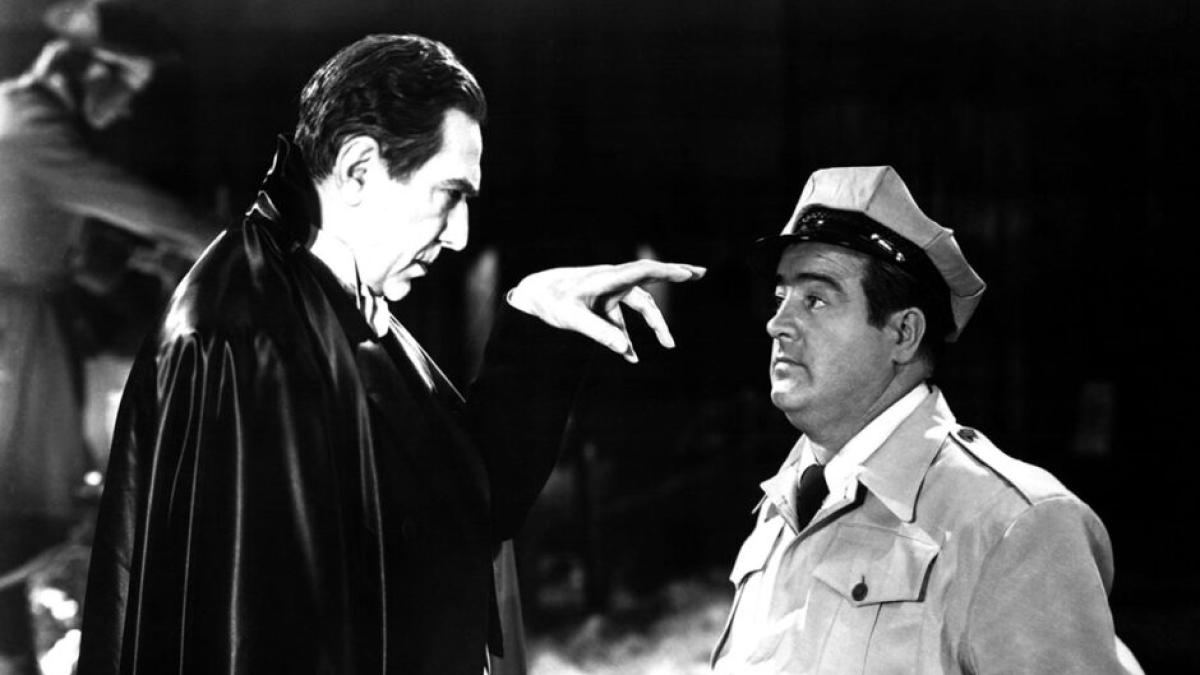
In 1948, he was coaxed back into playing Transylvanian royalty in Abbott and Costello Meet Frankenstein, an AFI top 100, Library of Congress-preserved corner of cinematic history that, according to just about everyone involved, nobody wanted to make. The better part of 20 years after he became the most famous version of Dracula in history, he came back to the role, now as a punchline for two bitter, aging vaudevillians who couldn’t even agree about who was on first.
What happened to Bela Lugosi?
Unfortunately, the massive success of Abbott and Costello Meet Frankenstein would mark the high point of what was left of Lugosi’s career. The remaining eight years of his life were spent in relative obscurity, appearing chiefly in low-budget films, marrying and divorcing people a generation or more younger than him, and spiraling into alcoholism and drug abuse advanced by debilitating sciatica and career embarrassments. Depending on who you ask, B-movie producers like Plan 9 from Outer Space’s Ed Wood either kept him afloat in his later years by providing regular work, or took advantage of his status as an unemployable icon, keeping him in high-collared capes and lab coats well past his 70th birthday. He died of a heart attack on August 16, 1956, napping in his Los Angeles apartment.
from Movie News | Movie Reviews | Movie Trailers https://ift.tt/HiFLcDd
Overwatch is arguably that game that completely misses the target when it comes to quite literally everything (no pun intended). But we gotta hand it to Blizzard, they totally nailed it with the K-Pop collab with LE SSERAFIM.
With all the fuss about support nerfs and character reworks, it’s no wonder Overwatch has turned into a constant letdown. Still, we can’t help but wrap up our days with an 8-loss streak in Silver. Okay, maybe I’m projecting, but we’ve all been there. So, let’s face it; when we’re frustrated with a game, the best way to shake things up is with a cool collab. We’ve seen it happen with PUBG and BLACKPINK, and even League of Legends with NEWJEANS.
Blizzard, of course, wanted in on the action. And since BTS is still on a break, the smart move is to team up with other HYBE groups, like LE SSERAFIM. So this is how you snag all those awesome girly-girl skins!
Which heroes are getting new skins on Overwatch?
A collaboration between LE SSERAFIM and Overwatch had already been suspected by some eagle-eyed fans who noticed hints here and there. Just a few hours ago, we finally got to see the results of this hard-won collaboration in a music video, featuring beautiful animations showcasing the skins that will likely be released for Sombra, Brigitte, Kiriko, D.va, and Tracer.
In addition to this sneak peek at the skins, Blizzard has also confirmed that the K-pop collaboration will encompass legendary hero skins, in-game items, and even a mysterious LE SSERAFIM-inspired game mode. Unfortunately, the requirements for obtaining each skin have not yet been announced, but we will surely get more information in the upcoming days.
Given Blizzard’s track record, each legendary skin typically carries a price tag of around $20. Therefore, the upcoming skins will likely follow the same pricing pattern. They may also be available in a bundle, much like what happened previously with the Diablo Lilith skin for Moira. Further information will be disclosed on October 30, while the in-game content itself is set to launch on November 1, so we might need to hold out until then.
from All the latest Gaming News, Reviews, Trailers and Gameplay Previews! PC and Console! https://ift.tt/Zo8KrOi
The latest in a long line of uninspired video game adaptations is officially available to stream, but not many people are tripping over themselves to catch a glimpse of Five Nights at Freddy’s.
Warning: This article contains spoilers about the lore behindFive Nights at Freddy’s.
The adaptation of the mega-popular horror game hit theaters in the states on Oct. 27 and, despite high fan hopes, its largely failed to impress. To be fair, it seems critics are more… well, critical, of the film than regular audiences, but its still looking fated to join the stacked ranks of failed video game movies. It may eventually reach the ranks of cult classic among the story’s most ardent fans, but without scares, is it really Five Nights at Freddy’s?
One of the biggest successes in the adaptation, at least according to the story’s biggest fans, is its attention to detail. The lore behind Five Nights at Freddy’s runs deep, and only those boasting solid familiarity with the original story likely caught each of the Easter eggs and shout-outs contained within the movie. That security office? On point. As was Vanessa, a seemingly innocuous character with quite the FNAF lore behind her.
Who is Vanessa in Five Nights at Freddy’s lore?
Image via Scott Cawthon
Vanessa is, by all initial appearances, a protagonist in Five Nights at Freddy’s. She comes across as knowledgable and kind, and consistently aids Mike in his endeavors. For most audiences, she seemed like the perfect addition to the hero lineup, but there’s far more to Vanessa than meets the eye.
See, in the complex and fascinating lore that makes up the Five Nights at Freddy’s universe, Vanessa isn’t much of a hero at all. In fact, she’s among the franchise’s lineup of villains — most audiences just don’t realize it yet.
See, Vanessa was corrupted in the Five Nights at Freddy’s game by Glitchtrap, the digital virus. The virus, a remnant of the serial killer William Afton, uses Vanessa to enact its insidious will, leaving her to serve as the main antagonist in at least one FNaF game. Vanessa might seem sweet on the surface, but you won’t like her so much when Vanny comes out. Vanny, Vanessa’s villainous personality, typically dons her trademark bunny costume when glitching, which draws a clear line between her two halves.
There were enough teasers in Five Nights at Freddy’s — including the revelation of Vanessa’s true parentage — to make it all but certain that, should a sequel get the green-light, Vanny will make an appearance in it. It will no doubt be interesting to see the character make the shift from her cheery, helpful personality to her dark, murderous side, and that by itself makes a solid argument for a continuation of the franchise.
from All the latest Gaming News, Reviews, Trailers and Gameplay Previews! PC and Console! https://ift.tt/sjxWYdy
With Blumhouse and Universal Pictures collaborating to bring us the Five Nights at Freddy’s live-action movie, there’s never been a more opportune time to refresh our memories and take a look back at Scott Cawthon’s universally successful franchise, which spawned an all-encompassing fictional universe consisting of spin-off games, a novel trilogy, an anthology series, and now the Blumhouse-produced blockbuster.
Usually, we would be ranking the FNAF games based on performance quality, but we thought it best to spice things up a little. Many of the later Five Nights at Freddy’s titles are notoriously difficult, so much so that Cawthon was forced to nerf several levels to make them less impossible.
Obviously, any ranking is entirely subjective rather than objective as the order differs per individual preference. Some of the hardest games that we’ve compiled might seem incredibly easy to someone else — and vice-versa — so it’s hard to say with the utmost confidence which FNAF titles are proven to be the most difficult. We’ll take into account certain facts surrounding the game’s development, as well as some personal insight, and make as comprehensive of a list as humanly possible.
10. Five Nights at Freddy’s: Security Breach
Although the trailers made it look promising, Five Nights at Freddy’s: Security Breach couldn’t hold a candle to some of the OG FNAF games. Cawthon tried to modernize the franchise for a new generation, but it backfired miserably. Instead of continuing the fearsome legacy created by its predecessors, Security Breach plays nothing like a traditional FNAF game, so it’s surprising to learn that it remains a mainstay in the series rather than a spin-off, but we digress.
If we cut this short, a first-time run of Security Breach won’t have you dying more than three times max, even if you’re an absolute rookie. If you can run circles around animatronics with bad AI, play a 3D version of Five Nights at Freddy’s with about a tenth of the difficulty, aim even poorly, and hold down the shift button, then you shouldn’t find too much to whine about with Security Breach.
9. Five Nights at Freddy’s: Help Wanted
If we had to summarize Five Nights at Freddy’s: Help Wanted, it would be on par with Security Breach, only ranking marginally higher due to the specific level with the plush babies, which successfully built up some tension and wasn’t too mind-numbingly easy. We’ll also admit that the vent repair mini-game was also challenging, so those are some minor qualities that Help Wanted has going for it. In general, Help Wanted is just a much worse version of old FNAF games, such as Five Nights at Freddy’s 2, which was known to be chaotic.
In fact, we’d even go as far as to say that the flat mode of Help Wanted is one of the most dull, uninspiring experiences in the whole franchise — and it’s not even close. The VR version would definitely rank higher, but that isn’t as accessible to everyone, plus it’s an afterthought, so it doesn’t really count.
8. Five Nights at Freddy’s: Sister Location
It isn’t such a simple task to rank Sister Location, especially since it’s horribly inconsistent. It has two nights that are infamously difficult, whereas the rest are insanely simple. Night 4 was so difficult upon release that Scott Cawthon was forced to nerf it in a patch, which the community does find absolutely hilarious, just in case you were wondering. Players can also unlock a bonus night by disobeying Circus Baby and going to the room on the opposite side of the Scooping Room on Night 5. This secret room is so precise that it’s bound to take a few tries, even if you’re a seasoned veteran in the FNAF world.
As far as Night 1, 2, and 3, there are limited challenges and tactics that rely purely on patience. Plus, Sister Location‘s regular Night 5 is almost impossible to lose, never mind impossible to beat. We’re convinced you’d have to completely stop trying to even stand a chance of failing.
7. Five Nights at Freddy’s: Special Delivery
Tracking animatronics is significantly harder in Special Delivery, the FNAF AR game. While the gameplay isn’t complicated, it doesn’t make the game any easier. The window given to you to shock an animatronic is slim, so unless you have lightning-fast reflexes, you’re in for a long ride. It didn’t bode well for Special Delivery being an iOS and Android exclusive, especially since most gamers have a strong aversion towards mobile games and don’t consider them to be ‘real’ gamer content.
Not to mention the fact that mobile games function on smaller screens with more finicky controls, so that’s also losing points for Illumix’s migration to mobile. We’ll recommend giving it a go if you’re interested in continuing the storyline established in Help Wanted, but only if you’re willing to sacrifice smooth gameplay.
6. Five Nights at Freddy’s
You wouldn’t think to find Five Nights at Freddy’s so high, but there’s a perfectly good reason for that. There’s a pretty clear divide in the FNAF fandom as to whether or not the original is difficult. Nowadays, if you’ve played through every sequel, it’ll be a piece of cake to speed-run FNAF. With that being said, let’s not underestimate how much precision is required to beat FNAF — constantly flicking between Freddy and Foxy, countering Chica and Bonnie, watching the doors, conserving the power — the whole deal. Especially for a newcomer, all these requirements can be overwhelming.
Even the FNAF warriors can remember their first time, so we’ll also chalk this decision up to nostalgia. Although it seems trivial compared to later sequels, FNAF laid the groundwork for the others, introducing gameplay seldom seen before that time, no matter how easy or hard it might be.
5. Five Nights at Freddy’s 3
Although it might look initially imposing, Five Nights at Freddy’s 3 is another inconsistency. It might look difficult to manipulate the mechanics, but since you have to lure Springtrap using audio, it isn’t too hard to trap him in a consistent loop. We’ll give credit where it’s due and say that managing your resources in FNAF 3 is a lot more challenging than that of future sequels. It does require intense focus to keep an eye on Springtrap while also navigating the cameras and all the other usual shenanigans of a FNAF title.
In many ways, the reboot system makes it harder, but even when the cameras go out, if you remember roughly where Springtrap is, you’ll eventually get the hang of leading him around. When the ventilation goes offline, the player’s vision will fade periodically. This doesn’t really take effect until later on, however, so you’re never too pressed for time.
4. Five Nights at Freddy’s 4
Although a lot of fans would consider Five Nights at Freddy’s 4 to be one of the more difficult games, it’s actually startling how minor the challenge increases throughout. Nightmare Freddy has a delay in checking on him, so he doesn’t pose much threat, and Foxy is arguably the most difficult part of the game.
That being said, focusing on the breathing mechanic is what ranks FNAF 4 higher than all the titles mentioned thus far. You do have to be patient and manage your time effectively, which isn’t always easy when the suspense is building. Once you get used to it, it becomes like clockwork, but it’s learning the mechanics and applying everything you’ve learned that’s the real challenge. As long as you’ve got some decent headphones, you shouldn’t be rage-quitting too much.
3. Freddy Fazbear’s Pizzeria Simulator
After hours of trying, you might just be able to beat Night 3 of Pizzeria Simulator, but then you have Night 4 to look forward to. Even after researching multiple strategies, no one can ever give you the answers to beat the game. It’s all about trial and error and finding what works, even if it isn’t the conventional way.
Much more so than other games, Pizzeria Simulator requires immense patience. And not the kind of patience we’ve preached for FNAF 3 and 4, more like monk-level zen. Once you hear a noise, you’ll have limited time to make a move, which usually means shutting everything down and waiting to continue. Also called FNAF 6, the so-called Pizzeria Simulator removes all optimal strategies, so there isn’t one ‘specific’ way to win. It’s all about the three P’s — Persistence, Patience, and Precision.
2. Five Nights at Freddy’s 2
If you thought the reaction time to beat the OG FNAF was ridiculous, the sequel takes it even further. Realistically, Night 1 and Night 2 could be beaten by anyone with relative ease, but that’s just the game’s way of lulling you into a false sense of security before going for the throat. But when the timeframe given to put on the animatronic mask is shortened as the nights go on, the difficulty rises from manageable to absolute insanity overnight (literally). By Night 3, you’re just about ready to tear out your hair, uninstall the game, and leave the FNAF fandom forever.
We’re shocked that so many people stuck around after Five Nights at Freddy’s 2, but that just goes to show how popular the franchise has become. When you have to check the camera constantly, the way you move needs to be perfect. Any small slip-up and it’s game over. And that isn’t even the hardest one.
1. Ultimate Custom Night
Technically, depending on what difficulty you personally set for Ultimate Custom Night, it could rank anywhere on this list, but let’s be honest, FNAF fans are fearless. No matter what, they’re going for gold. If we’re being truthful, 55 mode is undeniably harder than any FNAF game in existence. It’s actually considered an honor to beat 50-20 mode as not many people have even attempted it, let alone succeeded. We tip our hats to you, brave gamers.
It isn’t hard to understand why Ultimate Custom Night is so unbelievably impossible, but there are so many mechanics built in that it starts to get utterly ridiculous trying to focus on them all at once. There are doors, flashlights, cameras, vents, coins, sound cues, visual cues, time-based mechanics, distractions, small mini-games, using the mask, and keeping an eye on temperature and power. Just an hour of Ultimate Custom Night is the most terrible punishment imaginable for your worst enemy.
from All the latest Gaming News, Reviews, Trailers and Gameplay Previews! PC and Console! https://ift.tt/uKSiJY9
Video game adaptations are all the rage lately, but not all attempts are equal.
HBO’s approach to The Last of Us was broadly praised by fans of the original video game series, and Netflix’s Arcane persists as a shining example of the narrative-mining potential that games offer, but there are far more negative examples than positive. It seems to be a hard standard to hit, if decades of atrocious video game adaptations are any indication, but fans are still holding out hope for Five Nights at Freddy’s.
The game hasn’t earned the best reviews from early viewers, but there’s still hope that it will emerge as a cult classic that translates better among video game fans than newcomers to the story. FNaF is certainly a challenging concept to bring to the big screen, due in large part to its unique antagonists. The story follows a security guard for an abandoned family restaurant as he dodges its increasingly dangerous denizens — sentient animatronic characters with murder in mind. Freddy Fazbear, the restaurant mascot, is easily the most recognizable of the animatronic lineup, but fans of the video games are hoping to see a few more familiar faces crop up in the film.
That includes a character from Five Nights at Freddy’s 2. Balloon Boy wasn’t an inclusion in the first game, which could restrict him from a cameo in the first adaptation of the series, but fans are still hoping to catch a glimpse of the popular character.
Is Balloon Boy in Five Nights at Freddy’s?
It would make sense to restrict the characters in the Five Nights at Freddy’s adaptation to those included in the first game, but its not uncommon for future characters to get a tease in early releases. Balloon Boy technically shouldn’t appear in any story based on the first FNAF game, but that’s not stopping fans from searching every corner for a hint of the character.
And they’re guaranteed to catch a few, so long as they’re paying attention. Balloon Boy doesn’t make a major appearance in Five Nights at Freddy’s — that is, he’s not among the film’s primary animatronics — but he does crop up several times during the film’s runtime. The first time viewers catch a glimpse of him is relatively early in the film, when Mike retrieves his uniform from his locker, and the second comes a fair bit later. Following the credits sequence — yes, there’s a post-credits scene in the flick — Balloon Boy makes his second appearance. I won’t spoil the details of his cameos here, but rest assured, fans of the character will get their fill of Balloon Boy teasers in the Five Nights at Freddy’s movie.
from Movie News | Movie Reviews | Movie Trailers https://ift.tt/kDGR8xl
This article contains major spoilers for multiple games.
A plot twist in a game has the potential to hit way harder than in any other medium. After all, if the developers have done their jobs right you’ll feel as if you’re directly involved in the story, making any giant rug-pull all the more effective.
Many games attempt some twist, though a select few manage it so well that they will never be forgotten. Here are ten of the absolute best the medium has to offer.
Whoa, whoa, whoa she’s a lady? – Metroid (1986)
Samus Aran is now such a gaming icon it’s easy to forget that 1986’s Metroid kept her true identity hidden. The manual to the English language release referred to Samus as a man, and her armored power suit and the 8-bit graphics gave no reason to think otherwise.
Even finishing the game may not tip you off, as Samus stays in her suit in the first and second endings. But get good at the game and she’ll reveal her true self. This post on Reddit gives us an indication of how mid-’80s gamers received the big reveal:
“It was f**king mind blowing. No way a woman could be a hero. But man was I wrong. I was about 8. At the time heroes had all been male.”
I’m the bad guy – Star Wars: Knights of the Old Republic (2003)
I can still remember the chill that went down my spine when Knights of the Old Republic played its most shocking card. BioWare’s classic RPG stuck closely to the template of the original trilogy, despite being set thousands of years in the past. And so, perhaps inevitably, they needed an “I am your father”-style second-act twist.
But revealing that your amnesiac player character had been an incredibly powerful Sith Lord and the former master of your foe Darth Revan (and that the Jedi Order had been lying through their teeth)? Wowsers. From that point on you had a choice: prove that you’d turned a new leaf by playing the hero or embrace your past and start tossing lightning about and cackling like a maniac.
I feel I’m knockin’ on heaven’s door – Red Dead Redemption (2010)
By the time you get to Red Dead Redemption‘s twist, you’ll have spent many hours in the saddle as John Marston. John is far from your usual Rockstar Games protagonist: riddled with guilt for his past, wanting nothing more than a quiet life, and loving his family. All of which means he’s not happy at being blackmailed into working for the government, who want him to take out his former outlaw buddies.
Then comes the relatively late twist. John completes his mission and returns home, only for the government to tie up loose ends by sending the U.S. Army to take him out. This is a fight you cannot win, leaving John a bullet-riddled corpse in the dust. Three years later, you take control of John’s son Jack, out to avenge his father’s death. This character switch was controversial then and now, though every time we play out John Marston’s death we think that this time we just might be able to deadeye shoot all those soldiers…
Hello darkness, my old friend – Dark Souls (2011)
Dark Souls tells its story in such an obscure way that if you’re not paying attention you might not even realize there’s a twist at all. At first glance it appears like a typical chosen hero adventure: you are the last hope of a world about to die and must “link the fires” in order to prevent the “Age of Dark”.
But pay close attention to item descriptions and obscure characters (or, uh, watch a YouTube lore video) and you’ll realize that there is nothing special about your character, that you’re being manipulated into maintaining a fundamentally broken world, and the Age of Dark is part of a natural cycle of existence. The moral: never, ever trust a God in a Souls game.
To the beat of my heart – Doki Doki Literature Club (2017)
Arguably the biggest twist in Doki Doki Literature Club is that it isn’t actually about flirting with girls in a poetry club, but a truly chilling horror game in disguise. But, let’s face it, everybody that’s playing it must know that by now.
The real twist comes when the literature club’s leader Monika demolishes the fourth wall, reveals that she has become self-aware, confesses her love for the player, and begins to manipulate the game’s code. But the fun doesn’t stop there: Monika will promptly scan your PC and begin addressing you by your real name (well, your username) and have reactions to any external programs you’re running (like video capture software). To ‘beat’ Monika you must delve into the game’s install folder and delete her system file.
It’s the end of the world as we know it – Final Fantasy VI (1994)
Most Final Fantasy games feature some kind of twist, though few are as grand and unexpected as the franchise’s 1994 SNES swansong. Throughout the game, you’ve been battling an evil military dictatorship, led by Emperor Gestahl and his second-in-command Kefka. It’s predictable that Kefka kills the Emperor and takes his place as the lead bad guy, but what he does first is what few other video game villains ever manage.
He destroys the world. Yup, with newfound magical powers combined with screwing with some statues, Kefka destroys most of the planet’s surface. We pick up the story a year later in a miserable post-apocalyptic world where the survivors struggle to stay alive. Kefka gets his comeuppance in the end, but hats off to him for going the distance.
Ain’t got no tears left to cry – God of War: Ragnarök (2022)
God of War: Ragnarök has a surprisingly shocking sting in the tail. The game sees Kratos and Atreus taking on the Norse pantheon and gradually building a squad of unlikely allies to help you out. A key member is Odin’s son Týr, a former God of War who has renounced his violent ways and been imprisoned.
Týr is an affable sort, always ready with a helpful word of advice and a patient ear… all of which makes it quite the shock when he turns out to have been Odin in disguise all along. In retrospect, the game does drop a lot of hints, notably that in the subtitles the fake is “Tyr” while the real one is “Týr” (with an accent).
But I didn’t pick up on any of that, and the revelation that the most dangerous foe had been right under my nose the entire time knocked me for six.
If I need you now, would you kindly calm me down? – Bioshock (2007)
It really wouldn’t be a list of great twists without BioShock. This isn’t just an incredible story moment but examines player agency in all video games, essentially asking whether you’re playing the game, or it’s playing you. Throughout the story you’ve been following the guidance of Frank Fontaine as he points the path forward, acting as a voice over the radio like so many other games.
You obey, because what else are you going to do other than follow an objective marker? Then you’re hit with the horrible revelation that you’ve been psychologically conditioned, and will do anything so long as the command is proceeded by “Would you kindly”. Soon after learning that, it’s golfing time.
Driver, surprise me – The Last of Us Part II (2020)
But Bioshock isn’t the only iconic game to deliver its twist via golf club. 2013’s The Last of Us introduced us to Joel and Ellie, with the pair instantly becoming one of the iconic gaming double-acts. Going into The Last of Us Part II everyone knew the player character would switch to Ellie, though nobody (well, save those who spoiled themselves on the pre-release leaks) could have predicted Joel’s death would be quite so traumatizing.
So, let’s not beat around the bush. The inciting incident that begins Part II is everyone’s favorite guitar-pickin’, comic-book findin’, surgeon murderin’ Texan hero getting graphically beaten to death with a golf club. Well, it’s certainly one way to begin a sequel, and, three years later, many fans are still furious. We’re morbidly curious about how this will go down on the HBO show.
Joy, set my mind free – Metal Gear Solid 3: Snake Eater (2004)
There are many reasons Snake Eater often tops the rankings of best Metal Gear games, but a major contributing factor is the saga of The Boss. Described as “the mother of U.S. Special Forces”, she’s the mentor to Naked Snake (i.e. Big Boss) and makes her debut during the game’s opening mission as a radio contact.
She’s a good source of infiltration information over comms, though, in your first physical encounter, she destroys Snake’s weapon, cracks his ribs, breaks his arm, tosses him off a bridge, and then gives a portable nuclear weapon to the villains. Rude.
It’s only in the closing moments of the game that you realize what she’s been doing. She’s a scapegoat for both the U.S. and the Soviet Union, both of whom are blaming her in order to prevent nuclear war. For her sacrifice, she will forever be known as a traitor, and by killing her Snake will become a garlanded hero. The fatal gunshot at the end of Snake Eater effectively kicks off the tangled saga of every other entry in the series. As Big Boss admits, many years later, “Ever since the day I killed The Boss … I was already dead”. A good twist recontextualizes everything you think you know, and Snake Eater nails it.
from All the latest Gaming News, Reviews, Trailers and Gameplay Previews! PC and Console! https://ift.tt/blRjvwM